Small Business: Coping With the End of De Minimis Imports
Small businesses that rely on imported goods have been significantly affected by recent shifts in U.S. trade policy. The de minimis exemption, which previously allowed duty-free entry for shipments valued under $800, was eliminated for all countries as of August 29, 2025. This action was deemed necessary to help prevent counterfeit goods and illegal drugs such as fentanyl from entering the United States.1

As a result, small businesses must now pay duties on low-value goods they could once source inexpensively from China and elsewhere. These duties could include certain tariffs, depending on the product and country of origin, along with customs brokerage fees. Moreover, the rates that apply to some countries could change if trade agreements are struck.2
Businesses may also experience delivery delays and supply chain disruptions as the trade landscape changes. The ability to adapt quickly could determine whether a small business thrives or fails in the tariff era. Here are several strategies that might help you mitigate the negative impact on your business and your livelihood.
Consolidate shipments
Importers will be required to file formal customs entry documents for each shipment, even for a single low-cost item. This includes generating Harmonized System (HS) codes and providing commercial invoices with precise declared values. Businesses that don’t have experience with customs typically pay customs brokers for assistance. Grouping orders into fewer shipments can help cut shipping costs. To accomplish this, you may need to plan further ahead and count on longer delivery time frames.
There were 10 times as many de minimis shipments in 2024 than 2015
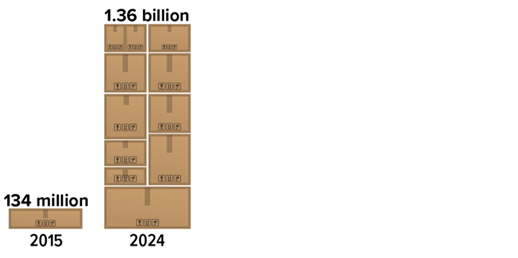
Source: The White House, July 30, 2025
Optimize sourcing
Running cost simulations that take duties into account may help you analyze the impact on your bottom line and decide whether it makes sense to switch to suppliers located in lower-tariff countries or in the United States. In addition to country-specific tariffs, other duties may be imposed on certain types of goods. To ascertain the duty rate that corresponds to an imported product, you must first identify the applicable Harmonized Tariff Schedule (HTS) code.
Despite your best efforts, you may be forced to reassess the viability of certain products and/or raise your selling prices. If you must, do so carefully after researching your competitors’ offerings and pricing. Communicating openly with customers may help manage their expectations.